About
Why MTBVAC AVANTE
10.7M
People affected by TB every year
1.23M
TB-related deaths annually
12
International partners
1 goal
New, effective vaccines against tuberculosis
The challenge
Tuberculosis (TB) is the world’s deadliest infectious disease. In 2024, 10.7 million people developed TB and 1.23 million people died from the disease. Despite advances in diagnosis and treatment, TB continues to disproportionately affect low- and middle-income countries, particularly in sub-Saharan Africa.
The only licensed vaccine to prevent TB – the 100-year-old BCG vaccine – provides important but incomplete protection against severe forms of childhood TB, but it does not prevent TB disease in adolescents and adults, among whom most transmission and disease occur.
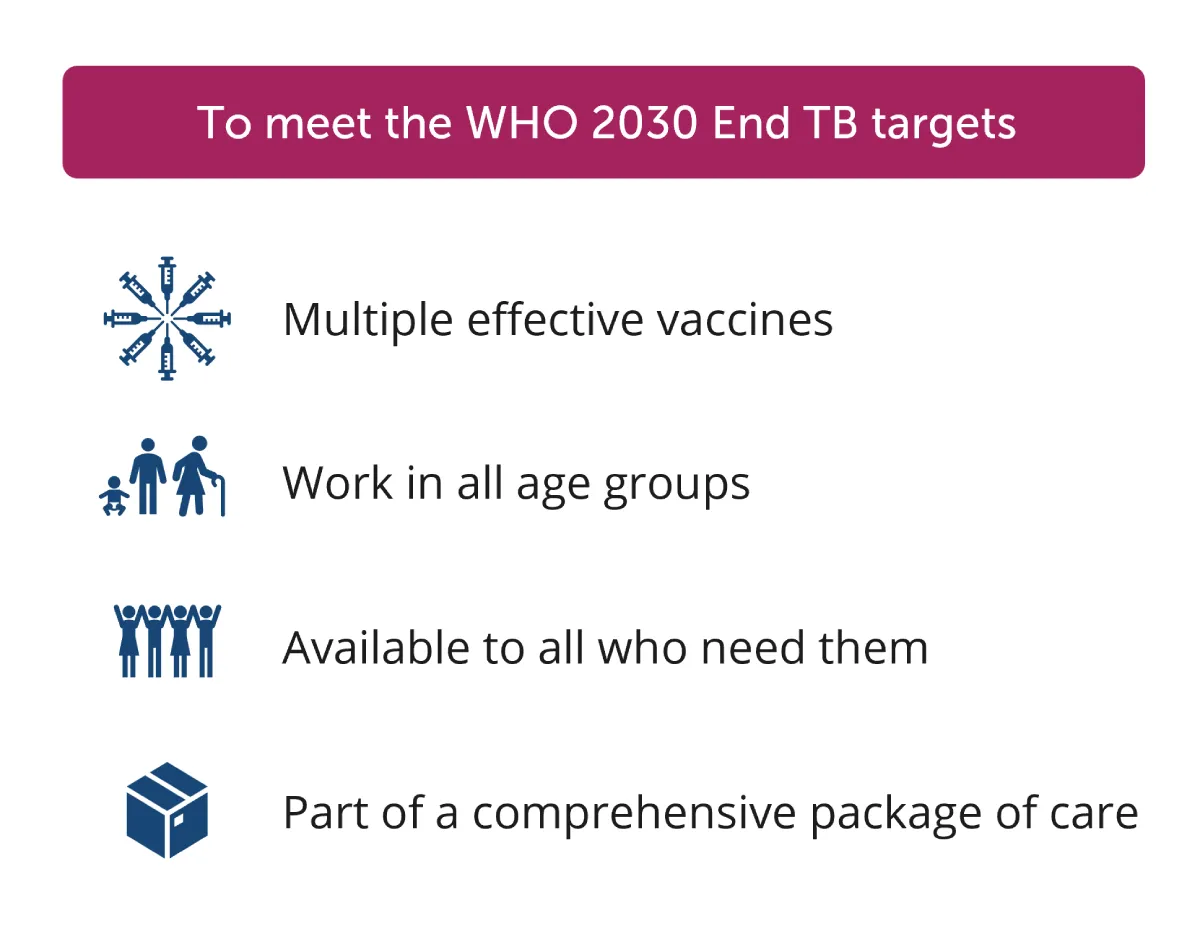
We urgently need new TB vaccines that work across all age groups to end TB and meet the WHO End TB Goals by 2030!
The promise
Multiple promising candidates are currently in late-stage trials. Efforts are meanwhile advancing to ensure their introduction as rapidly as possible, should they be found safe and effective. This includes country- and region-led approaches and work under the WHO TB Vaccine Accelerator Council.
New TB vaccines will help control TB while advancing health equity, avert millions in costs to people with TB and their families, and improve global economic growth for years to come. Studies show that over 25 years, delivering a new TB vaccine that is 50% effective in preventing disease among adolescents, adults, and infants would prevent up to 95 million people developing TB disease and avert as many as 11 million deaths. Over the same period, every US$1 invested in the delivery of such a vaccine could generate an economic return of $7.
The MTBVAC candidate
MTBVAC is the first live, attenuated TB vaccine derived from Mycobacterium tuberculosis (Mtb), the pathogen that causes TB in humans, to reach late-stage clinical trials. This is unlike BCG, which is derived from the bovine form of tuberculosis (Mycobacterium bovis).
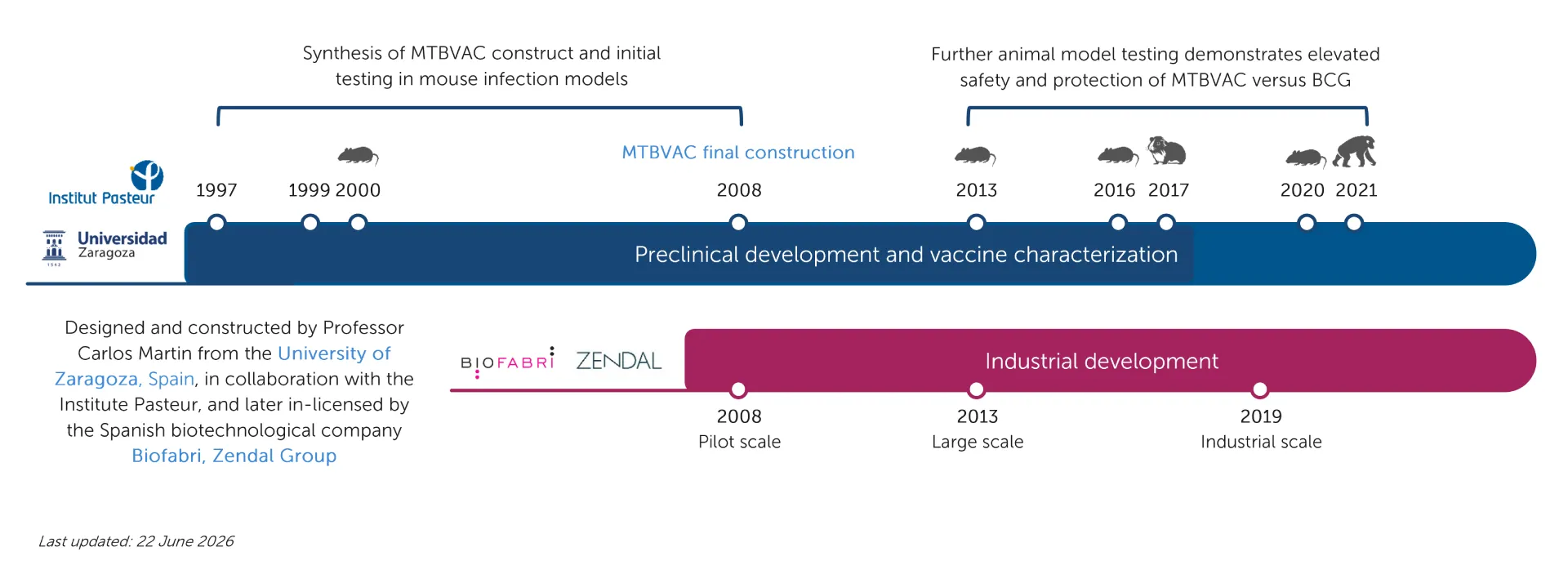
MTBVAC uses a weakened, harmless form of Mtb. The candidate was designed by Carlos Martin, from the University of Zaragoza, and Brigitte Gicquel, from Institut Pasteur, and was industrially developed and in-licensed by Biofabri (Zendal Group). Genes that trigger disease have been removed from the Mtb genome, while retaining the full range of antigenic targets that are missing from BCG that may be involved in generating an immune response against TB.
Results from in-human trials have demonstrated a favourable safety and immunogenicity profile of MTBVAC, supporting its potential to become a key tool in the fight against TB. Animal model studies have also demonstrated elevated safety and protection of MTBVAC versus BCG.
Importantly, MTBVAC is being studied to prevent TB disease in both young children (as a superior alternative to BCG) and adolescents and adults (for whom no vaccine is yet licensed).
Trials under MTBVAC AVANTE
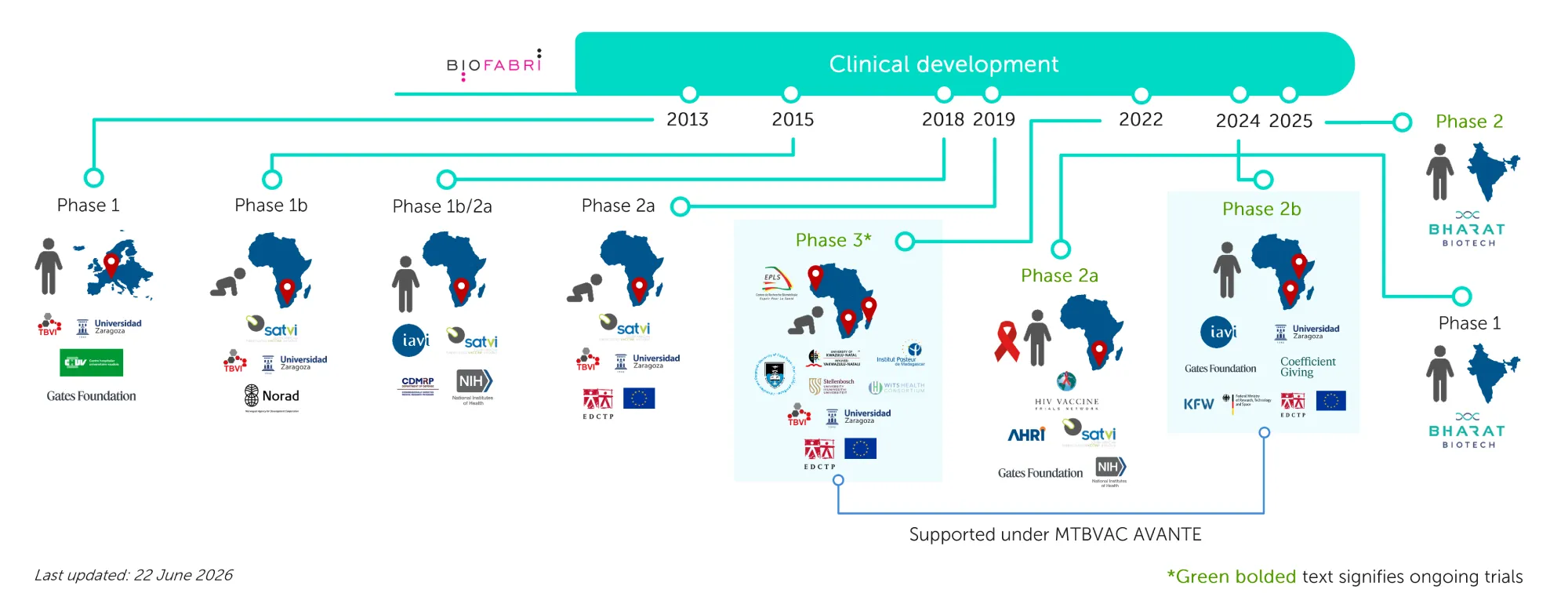
MTBVAC AVANTE is supporting two major ongoing clinical trials. The Biofabri-sponsored phase 3 trial in infants (
MTBVACN3, partly funded by EDCTP) is recruiting more than 7,000 newborns in Madagascar, Senegal and South Africa, and the IAVI-sponsored phase 2b trial in adolescents and adults (IMAGINE) is recruiting more than 5,000 participants at 16 clinical research centers in South Africa, Kenya, and Tanzania.
Other trials
A phase 2a trial sponsored by HIV Vaccine Trials Network (Fred Hutch Cancer Center group) is underway in adolescents and adults living with and without HIV in South Africa, while a phase 2 trial sponsored by Bharat Biotech was recently completed among adolescents and adults in India. A Phase 3 trial sponsored by Bharat Biotech is set to begin as early as the end of 2026 in adolescents and adults in India. Five other phase 1 and 2a clinical trials have been completed in adolescents, adults, and infants.
An access-informed value proposition for MTBVAC
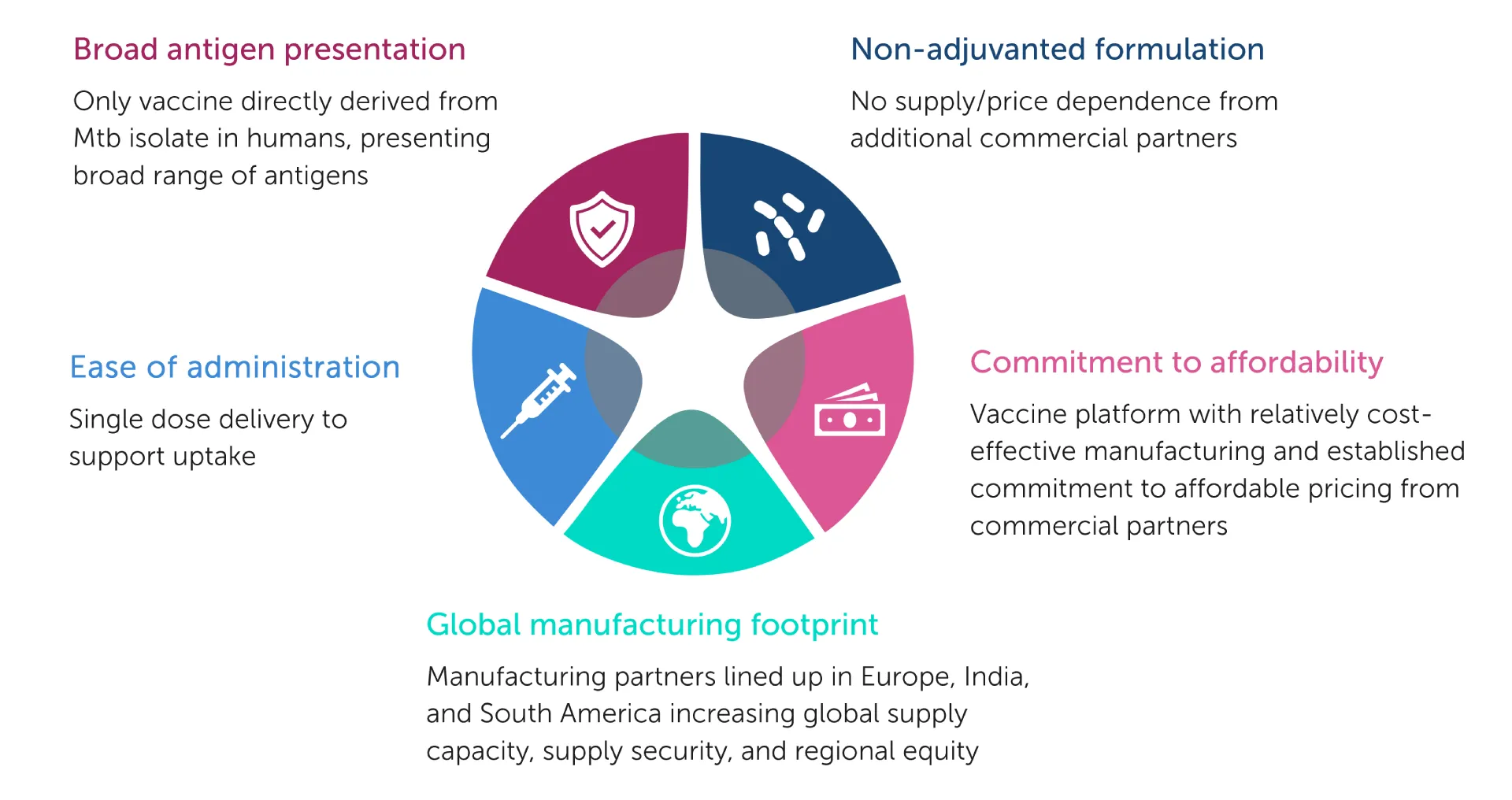
If MTBVAC is shown to safely prevent TB disease, it could be critically important in global efforts to suppress the TB pandemic given its ease of use, commitment to affordability, and anticipated widespread availability. In addition to Biofabri, partnerships with Bharat Biotech International Limited in India and Fundação Ataulpho de Paiva (FAP) in Brazil have been established to facilitate regional manufacturing capacities.